
"coffee quality by size"
10000 article(s) found

Which taste is better, big or small?
Production sites rated large coffee beans higher according to size. It is also said that the grading of the sieve size (coffee bean size) has nothing to do with French taste. The Nordic countries, which are now coffee advanced countries, purchase the most advanced coffee beans from Brazil and other places, mainly buying small particles of beans with sieve size 13-16. They avoid buying expensive, big beans and buy cheap, small beans instead.

There are three sizes of coffee cups. Smaller size means stronger coffee.
There are roughly three sizes of coffee cups. The smaller the coffee cup is, the stronger the coffee is: 1. The smallest coffee cup is called the espresso cup, which is 50ml80ml and is suitable for tasting pure high quality coffee or strong individual coffee. 2. The medium cup, also known as the Cappuccino cup, is the most commonly used. This kind of coffee cup is 120ml140ml in size, leaving room for people to make their own.
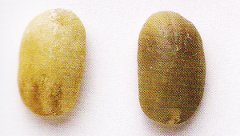
How to choose coffee beans by hand
Apples don't taste different because of size, which I agree with, but in the roasting of coffee beans, it doesn't matter if they're heated anyway. Coffee beans harvested from the same tree, regardless of size

An article clarifies the grading system and standard of Kenyan coffee what are the characteristics of Kenyan aa coffee
Professional coffee knowledge exchange more coffee bean information please follow coffee workshop (Wechat official account cafe_style) Kenyan coffee _ Kenyan coffee beans _ Kenyan coffee brand boutique coffee farm production area Kenya coffee grading system is established under the policy of government-led management of quality and guidance to coffee farmers, coffee is an official unit set up by the government after the harvest is completed.

Introduction to the difference of flavor description and taste of Esseyega Sheffikochel coffee beans G1 and G2
The difference between the flavor description of Yegashifichel G1 and G2 the taste of the coffee tree was planted by monks in Europe (a bit like Belgian monks growing wheat to brew beer) and was later transferred to farmers or co-operatives. Yejasuefei is actually constructed by surrounding coffee communities or cooperatives, including Edido Idido, ha, near Fog Valley Misty valley.

The size and specification of coffee beans
A, coffee can be divided into washing type and non-washing type according to specifications, and can also be divided into flat beans and round beans. Washing type: in the sink, after rubbing with water and utensils, the pulp and colloid are removed and dried, which is called washing coffee bean with uniform quality. Non-washing type: after the sun is naturally dried, the pulp and peel is removed by a sheller, and its quality is unstable. The fruit of coffee is made up of two oval shapes
Classification standard of coffee raw beans for fine coffee
There are two ways to classify raw coffee beans, one is the filter number, and the other is the elevation. It is divided by the number of the filter screen, and the size is in the unit of the screen (size). Round beans are generally smaller than flat beans, between 8-13 and 12-29. 8, 9, 10. 12, 13. 18. 29 = small, medium, ordinary. Quasi-big. Big, extra large. The bigger the size, the bigger the beans. Like SC.

Colombian boutique coffee-size is more important than all Colombian coffee quality Colombian coffee
Costa Rica's boutique bean producing areas are mainly in the south, with an elevation of more than 1500 meters, including St. Augustus in Uila Province.

Fine coffee beans, common sense, size, specification and grade of coffee beans
A, coffee can be divided into washing type and non-washing type according to specifications, and can also be divided into flat beans and round beans. Washing type: in the sink, after rubbing with water and utensils, the pulp and colloid are removed and dried, which is called washing coffee bean with uniform quality. Non-washing type: after the sun is naturally dried, the pulp and peel is removed by a sheller, and its quality is unstable. The fruit of coffee is made up of two oval shapes

Arabica coffee varieties ~ baking methods and flavor characteristics of giant elephant beans?
Arabica Coffee Variety ~ Giant Elephant Bean (Maragogype) baking method and flavor characteristics? The giant elephant bean (Maragogype) in coffee beans is a variety of Tibica (Arabica native bean); its tree, its leaves, and its fruit are much larger than the average Arabica. By the following Kaddura (Caturra/ bourbon) giant elephant bean coffee fruit /

The skills of choosing "good beans" and "bad beans" Coffee basic knowledge
I agree that apples don't taste different because of their size, but when it comes to roasting coffee beans, they all have to be heated anyway, and it doesn't matter if the coffee beans are different in size. Coffee beans harvested from the same tree, regardless of size
The concept of Fine Coffee Specialty Coffee (1)
The traditional classification of coffee beans is usually based on the classification criteria defined by the coffee producing countries, and then agreed to become common in the international market and traded under such a tacit understanding. For a long time, coffee producing countries have their own classification and evaluation criteria for coffee, which serve as the pricing guidelines in the coffee market. But slowly in recent years, coffee consuming countries have begun to demand unified evaluation criteria.
Coffee cup size
Coffee cup size is roughly divided into three types, the smaller the volume means the stronger the coffee: 1. The smallest type is called espresso cup, this coffee cup size is 50ml 80ml, suitable for tasting pure high quality coffee or strong single coffee;2. The medium cup is also called Cappuccino cup, which is the most commonly used, this coffee cup size is 120ml 140ml, leaving room for people to adjust by themselves

The quality and size of a coffee cup.
● coffee cups pay attention to the simplicity of ceramic cups and the roundness of porcelain cups, which symbolize different attitudes towards coffee. Pottery cup: rich in texture, suitable for deep-baked coffee with rich taste. Porcelain cup: the most common, can just explain the delicate aroma of coffee. Among them, the bone porcelain coffee cup made of high-grade porcelain clay and animal bone powder has the advantages of light texture, soft color and high density.

Those things about coffee extraction extraction and extraction equilibrium
2. Extraction and extraction equilibrium s the reasonable extraction range is set by ebf, and the extraction results are tested by tds. Combined with the grinding scale and the ratio of gouache to powder to modify the results, it is the quality control system of most knowledge-based barista when making espresso. Under this seemingly rigorous operation process, will there be loopholes? Extraction uniformity is a monitoring blind area which is easy to be ignored.

Which tastes best, big granulated beans or small granulated beans?
Coffee beans with large particles are highly valued in the place of production according to their size. It is also said that the French taste of the sieve size (coffee bean size) has nothing to do with it. Now the Nordic countries, which are advanced coffee countries, purchase the most advanced coffee beans in Brazil and other places, mainly buying small pellet beans with a sieve size of 13-16. They avoid buying high-priced large granulated beans and buy cheap small ones instead.

Those things about coffee extraction extraction and extraction equilibrium
The reasonable extraction range was set by ebf, and the extraction results were tested by tds. Combined with the grinding scale and the ratio of gouache to powder to modify the results, it is the quality control system of most knowledge-based barista when making espresso. Under this seemingly rigorous operation process, will there be loopholes? Extraction uniformity is a monitoring blind area which is easy to be ignored. Uniform means to distribute or divide.
How do you grade the coffee? What is pb/g1/g2?
When buying coffee beans, in addition to the name of the coffee origin in the package or in the introduction, sometimes you will see the English and numbers, G1, G2, G3, AA, PB, SHB, SHG, HB and so on. Have you ever wondered what these English or numbers stand for? What's the difference between them? In order to distinguish between good quality coffee beans and poor quality coffee beans, manufacturers do not
Fine coffee to learn the size and specification of coffee beans
A, coffee can be divided into washing type and non-washing type according to specifications, and can also be divided into flat beans and round beans. Washing type: in the sink, after rubbing with water and utensils, the pulp and colloid are removed and dried, which is called washing coffee bean with uniform quality. Non-washing type: after the sun is naturally dried, the pulp and peel is removed by a sheller, and its quality is unstable. The fruit of coffee is made up of two oval shapes

Is there a grade in Jamaica Blue Mountain Coffee? the grading system of coffee beans is shared.
Professional coffee knowledge exchange more coffee bean information please follow the coffee workshop (Wechat official account cafe_style) Front Street-Coffee grading system introduction 1. The way of grading by sieve is the method of grading according to the size of raw coffee beans. Raw beans are graded by determining the size of the beans through a holed iron plate sieve. The size of the hole in the screen is 1 inch 64 inches (less than 0.4).